Welcome to Esty Educator, a resource created exclusively for skin care schools and instructors. Each newsletter is filled with classroom tools and activities, important industry information, and links to ASCP resources created for schools and instructors.
Current Issue
- Proposed Rules Set to Impact Skin Care Schools' Federal Financial Aid
- Are You On the Brink of Instructor Burnout?
- San Diego—Here We Come! ASCP School Forum
- Launch Lab—Helping Students Ask the Right Questions About Their Careers
- Meet the ASCP Team

Proposed Department of Education Rules Set to Impact Skin Care Schools' Federal Financial Aid
By Laura Puryear, ASCP Director of Government Relations
A set of rules that would establish a new accountability standard for higher education programs with low earnings outcomes has been proposed by the US Department of Education (ED) after a January rulemaking session. The proposed rules, if formalized, will make a program ineligible for Title IV HEA funds if it fails a “do-no-harm” test that sets an earnings standard for its graduates.
Noting the monumental impact this could have on esthetics schools, and many schools in the fields of allied health and wellness, ASCP encourages all its members to reach out to their congressional representatives; find yours at Congress.gov.
Here is how these proposed rules might impact your school.
Read More
The do-no-harm test weighs whether a graduate of a program earns more than an adult with no degree beyond a high school diploma. The intent is to ensure students are not financially worse off after completing a program of study than they would have been without it. A program fails the earnings measure if the median annual earnings of the students who completed the program are less than the earnings threshold, which is calculated with data from the US Census Bureau. Two of the most common undergraduate certificate programs that fail the test are:
- Cosmetology and related personal grooming services: 92.5 percent of Title IV students fail the proposed rule
- Somatic bodywork and related therapeutic services: 89 percent of Title IV students fail the proposed rule
If a program fails the earnings test for two out of any three consecutive award years, the institution will be placed on provisional status, and the program will not be eligible to participate in the Direct Loan program for two years. Institutions must be able to demonstrate that at least half of the institution’s recipients of title IV HEA funds and half the institution’s total title IV HEA funds are not from low-earning outcome professions as defined by this provision.
There are several problems with how these measures are calculated— flaws which will disproportionately harm schools in the beauty and wellness professions because of how these professions are structured.
- The median earnings are compared to other professions without being adjusted for wage differences due to gender disparity, age disparity, or racial disparity.
- They do not account for unreported income, like tips, which makes up a large part of income in these professions.
- They don't account for regional variation within states (a cosmetologist in Chicago, Illinois, for example, probably is not making the same as one in Woodstock, Illinois).
- Most concerning, they do not account for wage differences between part-time work and full-time work, meaning if the average cosmetologist works 25 hours a week, for example, they are compared to the average high school graduate in another profession who works 40-plus hours a week. This is a huge problem in the beauty and wellness professions, where most pros work part-time.
This formula will unfairly cause most non-community-college programs in the beauty and wellness professions to fail this earnings test, meaning they will lose a critical stream of federal funding for their students.
According to the National Association of Student Financial Aid Administrators, "the effective date of July 1, 2026, on the proposed rule means that the first earnings premium calculations under the new rule will be released by July 1, 2027. Because programs only lose Direct Loan eligibility if they fail the metric in two of three consecutive years, the earliest a program could lose eligibility is July 1, 2028."
Proposed Rules
There are several other provisions in the rules that will affect your school, including one requiring institutions to disclose more information on institution websites, such as:
- Median earnings of students who completed the program
- Total cost of tuition and fees including books, supplies, and equipment for the duration of the program
- Whether the program is accredited and the name of the accrediting agency.
ASCP will send schools information on the proposed rules once a final draft has been released.


Avoiding Instructor Burnout: Create Supports for You and Your Team
By Karrie Osborn, ASCP Sr. Editor, Education
Are you facing instructor burnout? Do you feel you have the tools to help light your fire again? When facing professional fatigue and burnout, it's normal to fall back on the standard self-care list most likely shared with friends and clients over the years: get enough sleep, eat properly, employ exercise and movement strategies. And these are all great tools, but let's admit it, when in the throes of burnout, these tips can feel a little "nothing-burgerish."
Let's look at burnout from some new angles. First, understand that you're not alone. The 2024 State of the American Teacher survey1 found that teachers are twice as likely as comparable working adults to experience frequent job-related stress and three times more likely to report difficulty coping with that stress.
According to Dr. Nick Bach, a psychologist specializing in stress management, “Teacher burnout is more than exhaustion; it's a state of emotional, mental, and physical fatigue caused by prolonged stress and unmanageable workloads.” Bach says many teachers report feeling overwhelmed by high expectations, lack of support, and the emotional toll of caring for students.2
Read More
Do a Burnout Check-In
Whether you're in the onset of something feeling "not quite right" or you're in the throes of burnout, there are ways to reverse course. First, start by asking these questions:
Exhaustion (emotional and physical)—Are you becoming more emotional with everyday challenges? Are you collapsing into bed after work? Are you too tired to partake in social events?
Negative Outlook—Have you started to see the world through a “half-empty” lens? Do you generally feel more cynical than hopeful? Is your work starting to lose meaning?
Withdrawn and Detached—Is it easier to eat lunch in your car than the teacher's lounge? Do you find yourself becoming less interested in the success of your students? Is your work performance suffering as a result?
Depressed and Unwell—Are you exhibiting physical signs or symptoms when you go to work or think about going to work? Are you calling out from work even when you're not sick? Is it hard to find a smile when at work?
How Can Administrators Help Prevent Instructor Burnout?
Talkspace, a mental health resource for educators and others, lists these steps3 administrators can employ to help keep instructor burnout at bay:
- Provide uninterrupted planning time.
- Streamline administrative tasks.
- Support teacher autonomy without micromanaging.
- Address classroom overload and student needs.
- Offer mental health support and resources.
- Foster a culture of support and recognition.
- Encourage healthy work–life boundaries.
- Involve teachers in decision-making.
- Provide targeted support for new teachers.
- Ensure adequate compensation and benefits.
- Utilize teacher feedback to make improvements.
How Can Instructors Change the Narrative?
We all agree schools should provide the resources instructors need to be successful. But it's also critical for instructors to self-advocate and control their own narratives to prevent burnout. Here are a few places to start:
-
Routines are important—for you and your students. Having good processes in place saves time, creates expectations, eliminates frustration, and always gives you structure to fall back on.
-
Don't procrastinate. Putting things off creates extra stress you don’t need and actually builds an “anxiety tax” that we pay daily/hourly until the task is complete.
-
Reward yourself when you've made a step in the right direction. Don’t focus on how long it’s taking to right the course of the ship; focus on the fact you’ve got the ship’s wheel in hand!
-
Find the positives. Whether doing something nice for your students or colleagues, or just remembering to start your day from a place of gratitude, make a conscious effort to live in the positive.
-
Rely on your team. Do you have a mentor in your group? A support team? Use them to debrief at the end of a tough day. And if you don't have someone to work through your classroom issues with, talk to your administration about building this kind of resource for the team.
-
Feed your professional and personal passions. Whether it be learning a new technique, deepening your instructor skills, or taking up a new hobby you've always wanted to explore, honor the desire to grow. Learning is a creative process and a spirit-builder.
-
Don't feel guilty about self-care. While doom-scrolling is not healthy, having a lazy day in bed just because you want to is the beauty of being an adult. Listen to your body, listen to your mind. Follow your instincts on when you need to protect your time and space—and don’t feel bad for doing so.
-
Finally, pay attention. We should be the first to recognize signs of burnout within ourselves . . . hopefully before the little burdens become big burdens. Maintain your self-awareness and do mental check-ins on your well-being.
Burnout can be a short-lived blip in the road. And if you're on top of it, you might keep burnout at bay altogether. Be grounded and aware, find or build support systems and teams, never feel guilty about your self-care needs, and stay true to your passions—doing so creates a preventative care protocol toward maintaining a successful and burnout-free career as an esthetics instructor.
Notes:
1. The Muse, "Teacher Burnout: How to Recognize, Prevent, and Overcome It," (December 12, 2024), https://www.themuse.com/advice/teacher-burn-out.
2. Chris Balow, "How to Solve the Teacher Burnout Crisis: 10 Strategies," (January 19, 2024), https://blog.schoolmint.com/how-to-solve-the-teacher-burnout-crisis-10-strategies.
3. Talkspace, "11 Ways School Administrators Can Prevent Teacher Burnout," (May 23, 2025), https://business.talkspace.com/articles/how-to-prevent-teacher-burnout.


San Diego—Here We Come!
"We can't wait to see you at the 2026 ASCP School Forum in San Diego. Between the breadth of topics covered and opportunities for sharing insights with school leaders around the country, this conference is a one-of-a-kind experience!"
—Taffie Lewis, ASCP Director of Membership Outreach

Launch Lab—Helping Students Ask the Right Questions About Their Careers
Launch Lab is a free virtual series you can plug directly into an upcoming career readiness class or share with students to attend individually. It’s designed for beauty and wellness students who want clarity about launching a successful career. Each session tackles a high-impact career decision students are already thinking about.
Next Launch Lab: June 17, 10 a.m.
Meet Your Team
Is your school part of the ASCP family?
ASCP School membership includes a variety of resources for students, and lesson plans, tools, and presentations to help your faculty and students succeed. Learn more at ascpskincare.com/educators or email our school liaisons at education@ascpskincare.com with your questions and to request a 15-minute virtual school resource tour today!

Amber Edwards
ASCP School Liaison
AmberE@ascpskincare.com
800-789-0411, ext. 1613
"Career Toolkits are my favorite ASCP student and school membership benefit. They make it easy for students to decide if employment or business ownership is the right path for them; the interactive calculators (for compensation, startup costs, and revenue potential) help make that path so much clearer."
Areas Covered: Alaska, Arizona, California, Colorado, Connecticut, Delaware, D.C., Hawaii, Idaho, Kentucky, Maine, Maryland, Massachusetts, Montana, Nebraska, Nevada, New Hampshire, New Jersey, New Mexico, New York, North Carolina, North Dakota, Ohio, Oregon, Pennsylvania, Rhode Island, South Dakota, Utah, Vermont, Virginia, Washington, West Virginia, Wyoming
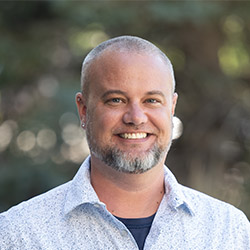
Brian Sinclair
ASCP School Liaison
Brian@ascpskincare.com
800-789-0411, ext. 1633
"My favorite thing about working with schools is being at the beginning of a student’s journey to becoming an esthetician and helping schools send amazing professionals into the world."
Areas Covered: Alabama, Arkansas, Florida, Georgia, Illinois, Indiana, Iowa, Kansas, Louisiana, Michigan, Minnesota, Mississippi, Missouri, Oklahoma, Puerto Rico, South Carolina, Tennessee, Texas, US Virgin Islands, Wisconsin